Start with the hours and equipment
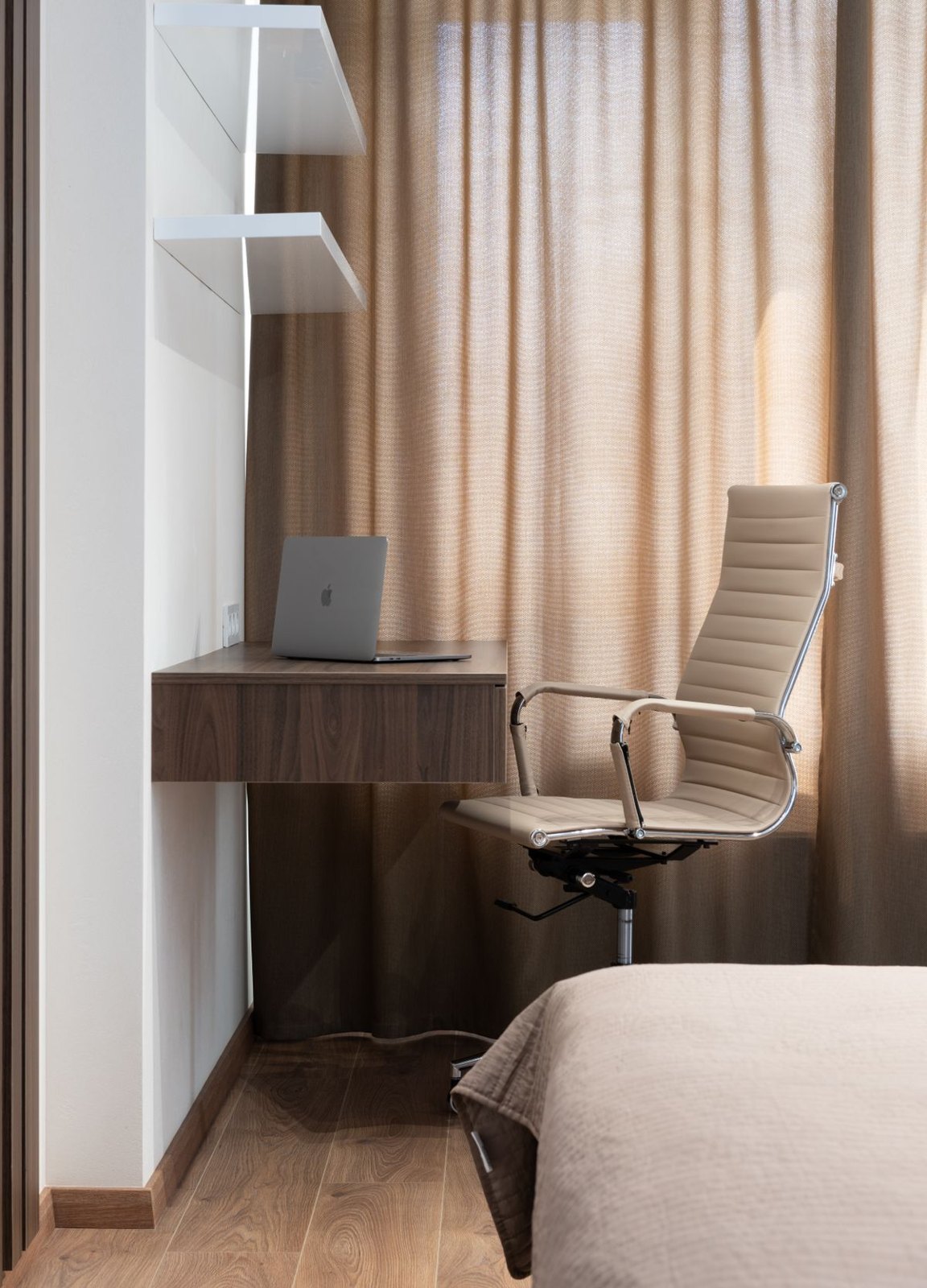
Decide how often you will work and what you need on the surface: a laptop alone, an external screen or paperwork as well. Ask for the table dimensions and a photograph of the actual chair. A decorative desk label does not establish that there is room to sit comfortably with your equipment. If the chair is fixed-height, think about whether that arrangement suits you rather than assuming every dining chair is interchangeable. Use your own employer's requirements where relevant, including rules about working while abroad.
If two occupants work, map simultaneous calls rather than assuming one good desk resolves both needs. A bedroom used as a backup call space still needs a suitable place for the device, power and a comfortable position. Ask whether the connection is shared across multiple units if that matters to your work. Avoid turning a dining chair balanced beside a bed into the permanent solution for a month-long booking.
Check the room around the desk
Look at socket positions, lighting and the direction of windows. Strong reflections can make a pleasant-looking corner awkward for screen use. Ask whether blinds or curtains can control the light without darkening the whole shared space. Consider background noise from the apartment itself: the kitchen, television and another person's calls may matter as much as the street. A separate room can be valuable when work hours overlap with someone else's leisure time, but only if it contains a genuinely usable surface and seat.
Also check the boundary between a leisure stay and your work arrangements. Obtain any necessary permission from your employer or clients, and use relevant official sources for questions about entry or working abroad. The accommodation's Wi-Fi and desk listing answer only the physical setup question. They do not establish that every administrative or contractual requirement for your circumstances has been met.
Verify connectivity for your needs
Ask about the connection serving that apartment and any known limitations. If calls or transfers are essential, request relevant information rather than accepting only a Wi-Fi symbol. Have a backup plan that meets your own security and data requirements, and check availability and cost before relying on it. Do not assume a cafe will provide a suitable workplace or that a public connection is appropriate for confidential work. The host can describe the service but cannot guarantee every external system you need to access.
Protect the living function
If the dining table must become a desk, decide where equipment will go at meals and how long setup takes. Keep cables out of walking routes and avoid moving furniture in ways the host has not approved. Schedule breaks that take you away from the work corner, so the whole stay does not shrink to one chair. If the arrangement would dominate the only shared room every day, compare a different layout before booking. A workable temporary office should coexist with the holiday household rather than displace it completely.