Trace the whole chain
Start at the apartment door, not the pavement outside. Check for steps inside the building, the lift's usable dimensions and any heavy entrance door. Then follow the route to the places you expect to use repeatedly: the food shop, transport stop and a nearby outing. Ask whether an apparently level path contains stair sections or narrow barriers. A host who knows the neighbourhood may be able to explain an alternative, but request concrete details rather than accepting a broad statement that families stay there regularly.
A useful message to the host might give the buggy's unfolded width and ask for the narrowest doorway, the lift entrance width and any unavoidable steps. This produces more actionable information than asking whether the apartment is buggy-friendly. If the reply says other guests manage by carrying it, work through whether that is realistic for your own group and luggage. Do not assume a solution suitable for another family's equipment will suit yours.
Use your own buggy's measurements
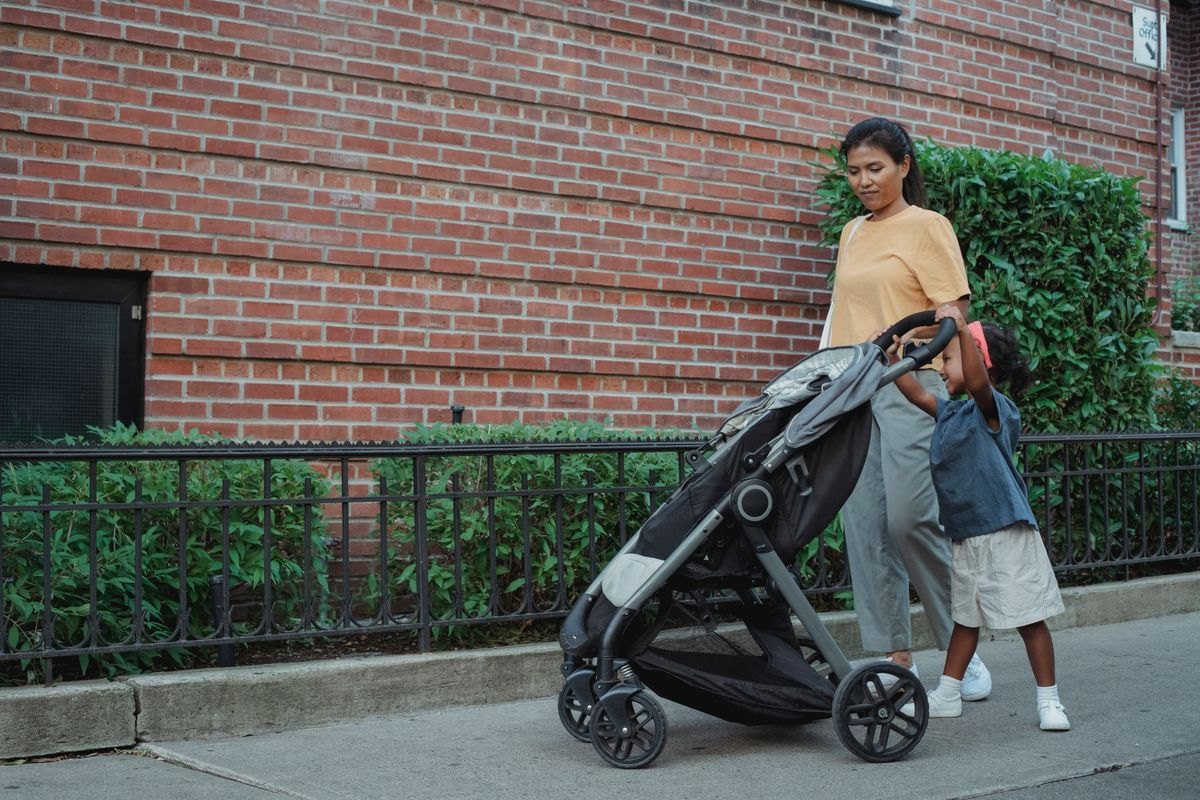
Measure the buggy in the form you plan to use, including its width when unfolded. A twin model presents different questions from a compact travel buggy. Ask about the lift doorway as well as the lift cabin, since both affect access. If folding is necessary, consider where the child, bags and folded frame will be during that process. An arrangement that works with two adults may be awkward when one adult takes a short trip alone. Work through that ordinary scenario before deciding the compromise is acceptable.
Remember destinations inside the neighbourhood. A shop entrance or cafe may involve its own step even when the route there is level. You do not need to pre-inspect every business, but the essential stops deserve attention. Keep one easy local outing available for a day when carrying equipment or navigating transport feels less appealing, so the holiday does not depend on completing a difficult route every morning.
Inspect the walking conditions
Look for pavement continuity, crossings, steep sections and surfaces that may make pushing more tiring. Map imagery can help identify questions, although it may not reflect temporary works or current obstructions. A slightly longer route with an easier crossing may be more practical than the shortest suggested line. Allow space in the schedule for loading and unloading at transport stops, and confirm the operator's current buggy arrangements directly if a particular service is essential to the trip.
Plan storage at the other end
Ask where the buggy can be kept inside the accommodation and whether it blocks any door or shared passage. Do not assume communal corridors are storage areas. On the first day, try one short local route before committing to a longer outing with shopping attached. The objective is not to find a perfectly flat destination; it is to understand which journeys your particular equipment and travelling group can repeat comfortably throughout the stay.